Let's See Morocco
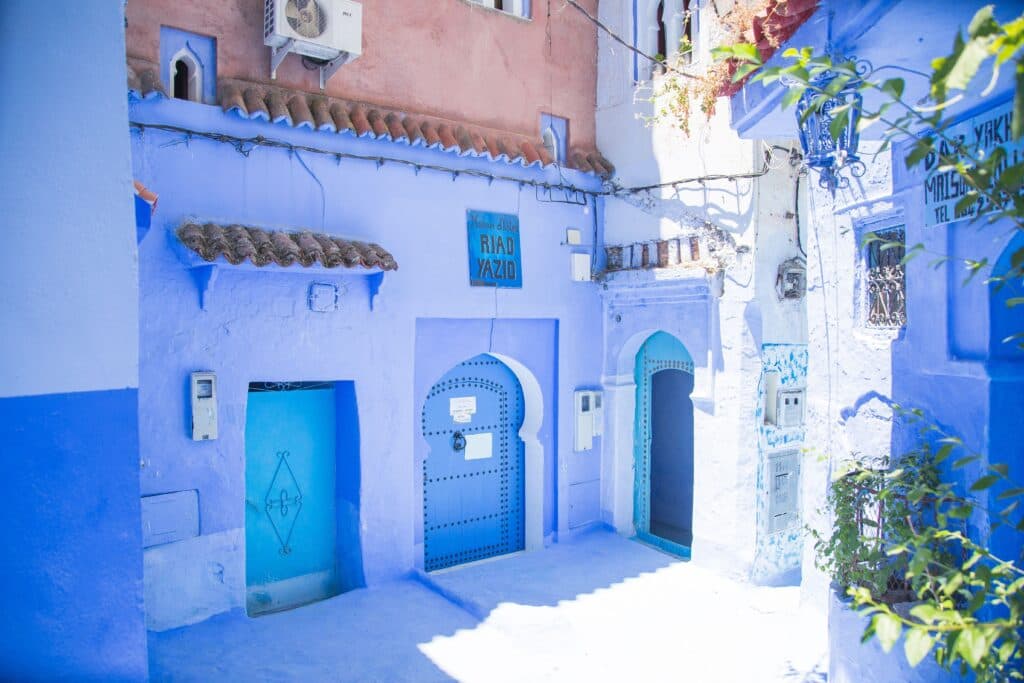
Blue painted streets in Chefchaouen Morocco

Morocco Destination Guide

Chefchaouen Travel Guide: What to See, Things to Do & How to Visit

Local travel guidance, practical planning information and destination ideas for your Morocco journey.

Destination Guide

Plan Your Visit

This guide covers what to see, how long to stay, when to visit, where to stay, transport, safety and practical planning advice.

01

Quick Facts

Region: Tangier-Tetouan-Al Hoceima

Known For: Blue-painted medina, Rif Mountains, traditional crafts, viewpoints, and relaxed atmosphere

Recommended Stay: 2 nights

Best Time to Visit: March to May and September to November

Nearest Major Cities: Fes, Tangier, and Tetouan

Main Highlight: The blue streets of the historic medina

Best Way to Explore: On foot, allowing time to discover the small streets, viewpoints, and local shops

02

Why Visit Chefchaouen?

Chefchaouen is one of Morocco’s most recognizable destinations, famous for the blue-painted buildings and narrow streets of its historic medina. Set in the Rif Mountains of northern Morocco, the city combines distinctive architecture with mountain scenery, traditional crafts, and a slower atmosphere than Morocco’s larger imperial cities.

The blue medina is the main attraction, but Chefchaouen is more than its colorful streets. The surrounding mountains offer hiking opportunities, while the city’s markets and artisan workshops provide an opportunity to discover local products and traditions.

01

Wander Through the Blue Medina

The historic medina is filled with blue-painted walls, narrow lanes, small squares, traditional houses, and local shops. Walking without a strict itinerary is one of the best ways to experience its atmosphere and discover quieter corners away from the busiest streets.

02

Enjoy the Rif Mountain Scenery

Chefchaouen is surrounded by the Rif Mountains, creating a dramatic backdrop to the city. The surrounding landscape makes the destination particularly appealing to travelers who want to combine cultural sightseeing with time outdoors.

03

Discover Local Crafts

The city’s markets and artisan shops offer traditional Moroccan products, including woven textiles, clothing, pottery, leather goods, and other handmade items. Exploring these shops gives visitors an opportunity to see crafts associated with the region.

04

Experience a Slower Side of Morocco

Compared with larger cities such as Marrakech and Fes, Chefchaouen has a smaller and more relaxed atmosphere. Its walkable medina, mountain setting, and compact size make it well suited to travelers who want to slow down and explore at their own pace.

05

Explore Beyond the Blue Streets

The surrounding area offers more than the famous medina. Travelers with additional time can explore nearby mountain trails, viewpoints, waterfalls, and rural landscapes, making Chefchaouen a useful base for discovering the natural side of northern Morocco.

03

Top Things to Do in Chefchaouen

Chefchaouen is compact enough to explore on foot, but there is more to see than the famous blue streets. Give yourself time to explore the medina, visit its main landmarks, and experience the surrounding Rif Mountains.

01

Explore the Blue Medina

Start by walking through the historic medina and its network of blue-painted streets and small squares. The best experience comes from exploring beyond the busiest paths and taking time to notice the details of the doors, walls, stairways, and traditional houses.

02

Visit the Kasbah Museum

The Kasbah sits in the center of the medina beside Uta el-Hammam Square. Its grounds include gardens, historic buildings, and a small ethnographic museum where visitors can learn more about the region’s history and traditions.

03

Relax in Uta el-Hammam Square

Uta el-Hammam is the main square in the old medina and a natural place to take a break while exploring the city. Cafés and restaurants surround the square, making it a convenient spot to observe daily life in Chefchaouen.

04

Walk to the Spanish Mosque

The Spanish Mosque, located on a hill overlooking Chefchaouen, is one of the city’s best-known viewpoints. The walk takes you outside the medina and provides panoramic views across the blue city and surrounding Rif Mountains.

05

Hike in the Rif Mountains

Chefchaouen’s mountain setting makes it a good base for outdoor activities. Several trails lead into the surrounding Rif landscape, ranging from relatively easy walks to more demanding hikes.

For longer or unfamiliar routes, consider going with a local guide who knows the terrain and current trail conditions.

06

Visit the Ras El Maa Spring

Ras El Maa is a natural spring just outside the eastern edge of the medina. Water from the Rif Mountains flows through the area, which has traditionally played an important role in the city’s water supply.

It’s an easy place to include while walking around the medina and continuing toward the Spanish Mosque.

07

Shop for Local Crafts

Chefchaouen’s medina contains numerous small shops selling traditional products, including woven blankets, clothing, pottery, leather goods, and handmade souvenirs.

Take time to compare products and prices, particularly when purchasing handmade items, and ask about the origin and production of anything you’re interested in buying.

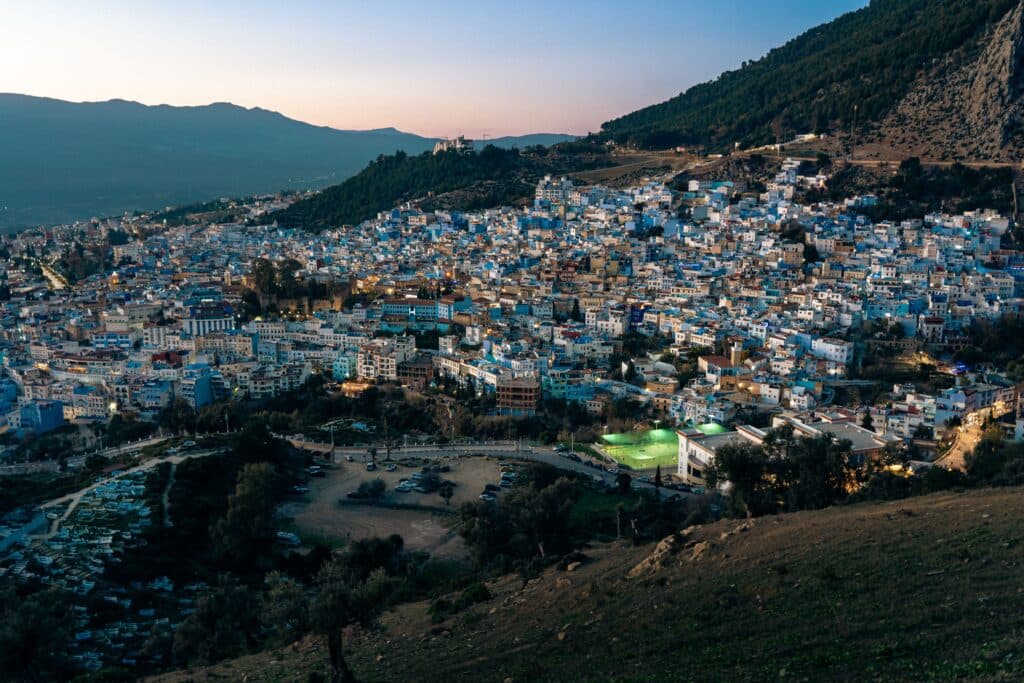
View of Chefchaouen blue city from the Spanish Mosque viewpoint

04

How Much Time Do You Need in Chefchaouen?

For most travelers, two nights and one full day is enough to experience Chefchaouen’s main attractions. The compact medina makes it possible to see many of the city’s highlights on foot without rushing.

Travelers interested in hiking or exploring the surrounding Rif Mountains should consider staying longer.

01

One Day

One full day can cover the main highlights of Chefchaouen. Start by exploring the blue medina, visit the Kasbah Museum, spend some time at Uta el-Hammam Square, and walk toward Ras El Maa and the Spanish Mosque.

This is enough for travelers who are visiting Chefchaouen as part of a larger northern Morocco itinerary.

02

Two Days

Two days provide a more relaxed experience. After exploring the medina and its main landmarks on the first day, use the second day to explore the surrounding mountains, visit nearby natural attractions, or simply spend more time discovering the city’s quieter streets.

03

Three Days or More

Three days are worthwhile if hiking and nature are a major part of your trip. You’ll have more flexibility to explore mountain trails and nearby rural areas without having to rush back to the city.

04

Suggested Two-Day Itinerary

Day 1: Explore the blue medina, visit the Kasbah Museum, walk around Uta el-Hammam Square, discover local shops, and visit Ras El Maa.

Day 2: Walk to the Spanish Mosque for the views, explore the surrounding Rif Mountains, and spend the afternoon discovering quieter parts of Chefchaouen.

If Chefchaouen is part of a longer Morocco itinerary, two nights is a good balance between seeing the main sights and leaving enough time for other destinations.

05

Best Time to Visit Chefchaouen

Chefchaouen can be visited throughout the year, but spring and autumn generally offer the most comfortable conditions for exploring the medina and surrounding Rif Mountains.

01

Spring (March to May)

Spring is one of the best times to visit Chefchaouen. Temperatures are generally comfortable for walking, and the surrounding Rif Mountains become greener after the winter rains.

This is also a good period for travelers who want to combine sightseeing in the medina with hiking or other outdoor activities.

02

Summer (June to August)

Summer is generally warm and can become hot during the afternoon, although Chefchaouen’s mountain location can make conditions more pleasant than in some inland Moroccan cities.

If you visit during summer, plan longer walks and hikes for the morning or late afternoon and take breaks during the hottest part of the day.

03

Autumn (September to November)

Autumn is another excellent season for visiting Chefchaouen. Temperatures gradually become more comfortable after summer, making it easier to explore the medina and surrounding mountains on foot.

September can still be warm, while October and November are generally more comfortable for outdoor activities.

04

Winter (December to February)

Winter is cooler and wetter than the other seasons. Rain is possible, and temperatures can drop significantly in the evenings because of the city’s mountain setting.

If you visit during winter, bring warm and waterproof layers, particularly if you plan to hike.

05

Our Recommendation

For a combination of comfortable sightseeing and outdoor activities, March to May and September to November are generally the best periods to visit Chefchaouen. These seasons offer pleasant conditions for exploring both the blue medina and the surrounding Rif Mountains.

06

Where to Stay in Chefchaouen

Chefchaouen is a relatively compact city, so the best area to stay depends mainly on whether you want to be inside the historic medina or prefer easier vehicle access and modern facilities.

01

Stay Inside the Medina

Staying inside the blue medina puts you close to the city’s main attractions, restaurants, cafés, and traditional shops. Many accommodations are small riads and guesthouses built around traditional courtyards.

The main advantage is being able to explore the medina directly from your accommodation. Keep in mind that vehicles generally cannot enter the narrowest streets, so you may need to walk with your luggage from the nearest accessible road.

02

Stay Near Uta el-Hammam Square

The area around Uta el-Hammam Square is convenient for first-time visitors because it is close to the Kasbah, restaurants, cafés, and many of the medina’s main streets.

It’s a practical choice if you want to stay in the heart of the city’s historic atmosphere.

03

Stay Outside the Medina

Accommodation outside the medina can offer easier vehicle access, larger rooms, and sometimes views over the surrounding mountains.

This can be a better option if you’re traveling by car, carrying a lot of luggage, or prefer a quieter setting away from the busiest parts of the old city.

04

Stay in a Traditional Riad

A traditional riad or guesthouse can make the accommodation itself part of the Chefchaouen experience. Many properties incorporate local architecture, tiled courtyards, wooden details, and traditional Moroccan decoration.

05

Which Area Is Best?

For a first visit focused on the blue medina and cultural experience, staying inside or immediately around the medina is generally the most convenient option. If easy parking and vehicle access are more important, consider staying outside the historic center.

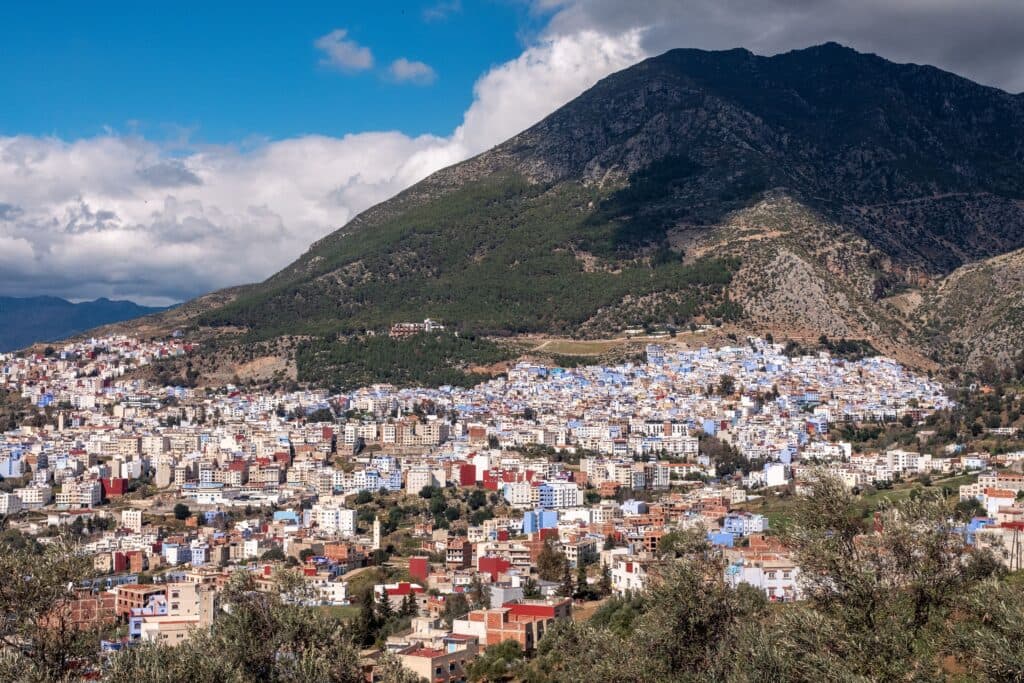
Rif Mountains surrounding Chefchaouen Morocco

07

Getting to Chefchaouen

Chefchaouen is located in the Rif Mountains of northern Morocco. Because the city does not have its own railway station or major airport, most travelers reach it by road from Fes, Tangier, Tetouan, or other nearby cities.

01

From Fes

Fes is one of the most common starting points for a trip to Chefchaouen. The journey can be made by bus, private transfer, or rental car.

The road passes through the northern Moroccan countryside and mountainous landscapes, making the journey part of the experience.

02

From Tangier

Chefchaouen can also be reached from Tangier by road. A private transfer or rental car gives you more flexibility, while buses provide a more economical option.

This combination works particularly well for travelers arriving in northern Morocco through Tangier before continuing to Chefchaouen and Fes.

03

From Tetouan

Tetouan is relatively close to Chefchaouen, making it one of the easiest cities from which to reach the Blue City. You can travel by bus, taxi, rental car, or private transfer.

04

By Bus

Intercity buses connect Chefchaouen with several Moroccan cities. This can be a practical option for independent travelers who do not want to drive.

Check the current schedule before traveling, as departure times and availability can change.

05

By Rental Car

A rental car provides flexibility to stop at viewpoints and explore the surrounding Rif Mountains at your own pace.

The roads approaching Chefchaouen are mountainous, so allow extra time and drive carefully, particularly around bends and during periods of rain.

06

By Private Tour

A private tour or transfer is a convenient option if you’re combining Chefchaouen with Fes, Tangier, Tetouan, or other northern destinations.

You can build the route around your interests and stop along the way rather than treating the journey as a simple transfer.

08

Is Chefchaouen Safe to Visit?

Yes. Chefchaouen is generally considered a safe destination for travelers, and its relaxed atmosphere makes it a popular choice for visitors exploring northern Morocco.

The main considerations are practical rather than security-related. The medina has many narrow streets, stairs, and uneven surfaces, so comfortable walking shoes are recommended, especially if you plan to explore for several hours.

Because Chefchaouen is a popular tourist destination, you may encounter shopkeepers, unofficial guides, or people offering services in busy areas. If you want a guided experience, choosing a reputable local guide can help you better understand the city’s history and culture.

When hiking in the surrounding Rif Mountains, choose routes suitable for your experience level and consider local guidance for longer or less familiar trails.

As with any destination, keep your belongings secure, respect local customs, and use normal travel precautions.

With its peaceful atmosphere, walkable medina, and welcoming local community, Chefchaouen is a comfortable and rewarding destination for travelers exploring Morocco.

09

Frequently Asked Questions

01

Is Chefchaouen worth visiting?

+

Yes. Chefchaouen is one of Morocco’s most unique destinations, known for its blue-painted medina, Rif Mountain scenery, traditional crafts, and relaxed atmosphere. It offers a different experience from Morocco’s larger cities.

02

How many days do you need in Chefchaouen?

+

For most travelers, two nights and one full day is enough to explore the blue medina, visit the main viewpoints, and experience the city’s atmosphere. Travelers interested in hiking may prefer to stay longer.

03

Why is Chefchaouen painted blue?

+

The exact origins of the blue color are debated. Different explanations connect it to local traditions, cultural influences, and aesthetic choices. Today, the blue-painted streets are one of the city’s defining characteristics and part of its identity.

04

Is Chefchaouen near Fes?

+

Yes. Chefchaouen is commonly combined with Fes on a northern Morocco itinerary. The two destinations can be connected by bus, rental car, or private transfer.

05

Can you visit Chefchaouen from Marrakech?

+

Yes, but it is a long journey. Most travelers include Chefchaouen as part of a broader itinerary that also covers cities such as Fes, Tangier, or other northern destinations.

06

What is the best time to visit Chefchaouen?

+

Spring and autumn generally offer the best conditions for exploring the city on foot and enjoying outdoor activities. March to May and September to November are particularly comfortable.

07

Is Chefchaouen suitable for families?

+

Yes. Families can enjoy the city’s colorful streets, viewpoints, and cultural experiences. However, the medina’s stairs and uneven paths should be considered when traveling with young children or people with mobility difficulties.

08

Should I stay overnight in Chefchaouen?

+

Yes. Staying overnight allows you to experience the city after the day visitors leave and gives you more time to explore the medina, viewpoints, and surrounding areas at a relaxed pace.

10

Plan Your Visit to Chefchaouen

Chefchaouen is more than a collection of blue streets. Its charm comes from the combination of its mountain setting, traditional architecture, local crafts, and peaceful atmosphere.

Whether you visit for photography, culture, hiking, or simply a slower travel experience, the Blue City offers a memorable stop in northern Morocco. Including Chefchaouen alongside destinations such as Fes and Tangier creates a balanced itinerary that combines history, nature, and local culture.

Explore Morocco Your Way

Include Chefchaouen in Your Morocco Journey

Tell us your dates, arrival city, group size and the places you want to experience. We can help you shape a practical private route around your time in Morocco.

Planning Support

  • Private Morocco routes
  • Local destination advice
  • Realistic driving times
  • Flexible accommodation levels
  • Sahara and cultural journeys