Let's See Morocco
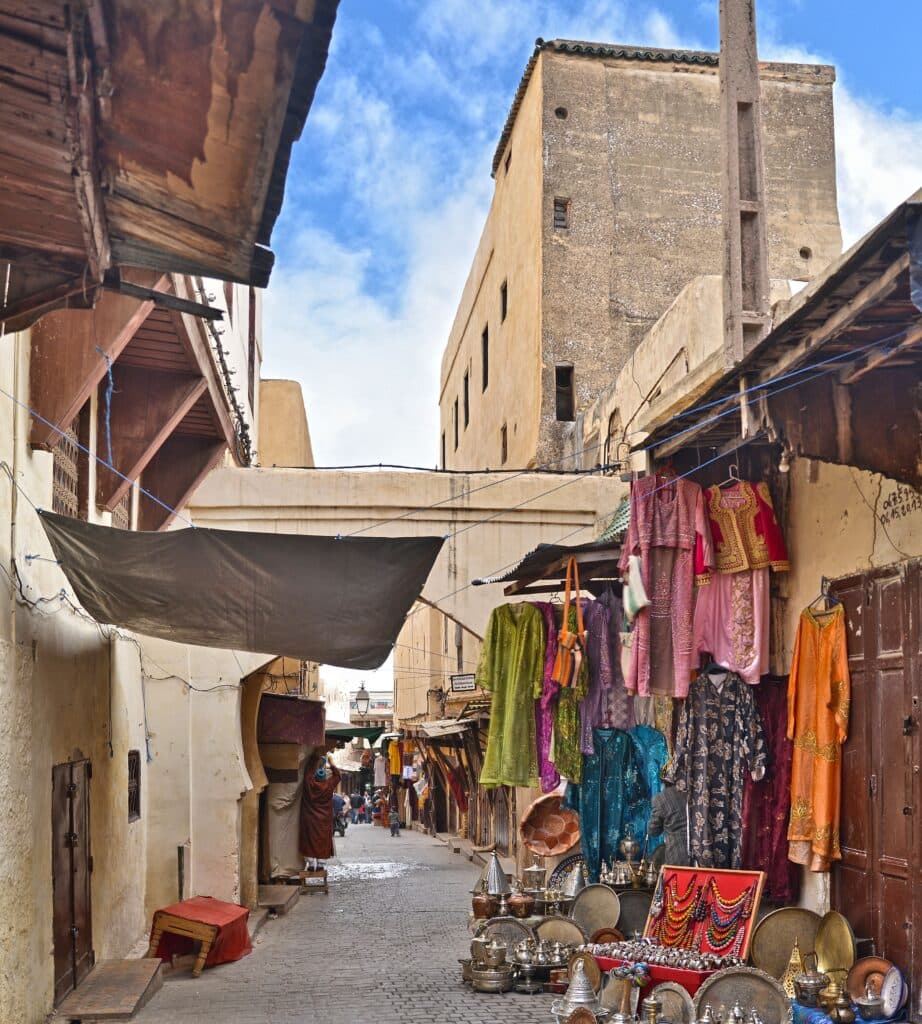
Historic streets of Fes el-Bali medina in Morocco

Morocco Destination Guide

Fes Travel Guide: What to See, Things to Do & How to Visit

Local travel guidance, practical planning information and destination ideas for your Morocco journey.

Destination Guide

Plan Your Visit

This guide covers what to see, how long to stay, when to visit, where to stay, transport, safety and practical planning advice.

01

Quick Facts

Region: Fès-Meknès

Known For: Fes el-Bali, historic architecture, traditional craftsmanship, leather tanneries, madrasas, and Moroccan cuisine

Recommended Stay: 2–3 nights

Best Time to Visit: March to May and September to November

Nearest Airport: Fes–Saïss Airport

Main Highlight: The historic medina of Fes el-Bali

Best Way to Explore the Medina: On foot, with a licensed local guide if you want historical context and easier navigation

02

Why Visit Fes?

Fes is one of Morocco’s most historically significant cities and a fascinating destination for travelers interested in culture, architecture, craftsmanship, and traditional Moroccan life. Founded in the 9th century, the city developed into an important center of learning, trade, religion, and craftsmanship, and its historic medina remains one of the most remarkable urban areas in Morocco.

The heart of the city is Fes el-Bali, the ancient medina known for its maze of narrow streets, historic gates, mosques, madrasas, workshops, markets, and traditional houses. Exploring it on foot reveals a side of Morocco that is very different from the modern streets and wide boulevards found elsewhere.

Fes is also renowned for its craftsmanship. Visitors can discover traditional pottery, leatherwork, metalwork, textiles, and wood carving, much of which continues to be produced using techniques passed down through generations.

01

Explore One of the World’s Great Historic Medinas

Fes el-Bali is the city’s historic core and one of the largest car-free urban areas in the world. Its narrow streets lead through markets, residential neighborhoods, religious buildings, workshops, and quiet courtyards.

02

Discover Morocco’s Intellectual Heritage

Fes has long been associated with scholarship and religious learning. The city is home to historic institutions and monuments that reflect its centuries-old role as an intellectual center in Morocco.

03

Experience Traditional Moroccan Craftsmanship

The medina is filled with artisans working with leather, ceramics, brass, wood, textiles, and other materials. Visiting the workshops provides an opportunity to see traditional crafts being produced rather than simply displayed in shops.

04

Taste the Flavors of Fes

Fes has a rich culinary tradition influenced by centuries of Moroccan history. From traditional tagines and couscous to pastries and fragrant mint tea, exploring the city’s food is an important part of experiencing its culture.

05

See a Different Side of Morocco

While Marrakech is known for its lively atmosphere and major tourist attractions, Fes offers a more historical and traditional experience. Its ancient streets, architecture, craftsmanship, and long cultural heritage make it an essential destination for travelers who want to understand Morocco beyond its most famous tourist routes.

03

Top Things to Do in Fes

Fes is best explored slowly. Many of its most interesting experiences are found within the historic medina, where centuries-old monuments, artisan workshops, markets, and residential streets are concentrated within a relatively small area.

01

Explore Fes el-Bali

Start with Fes el-Bali, the oldest part of the city and the heart of its historic medina. Wander through its narrow streets and discover colorful markets, traditional workshops, historic buildings, and quiet residential alleys.

Because the medina is extensive and easy to get lost in, a knowledgeable local guide can help you understand what you’re seeing and find places you might otherwise miss.

02

Visit the Al Quaraouiyine Mosque and University

The Al Quaraouiyine complex is one of the most important historical institutions in Fes and is traditionally associated with the world’s oldest existing university. Founded in the 9th century, it became an influential center of Islamic scholarship and learning.

Non-Muslim visitors generally cannot enter the prayer hall, but the surrounding area and architecture can still be appreciated from outside.

03

See the Bou Inania Madrasa

The Bou Inania Madrasa is one of the finest examples of Marinid architecture in Fes. Its interior features detailed zellij tilework, carved stucco, and cedar wood decoration.

The madrasa is located within the medina and is relatively easy to include while exploring the surrounding streets.

04

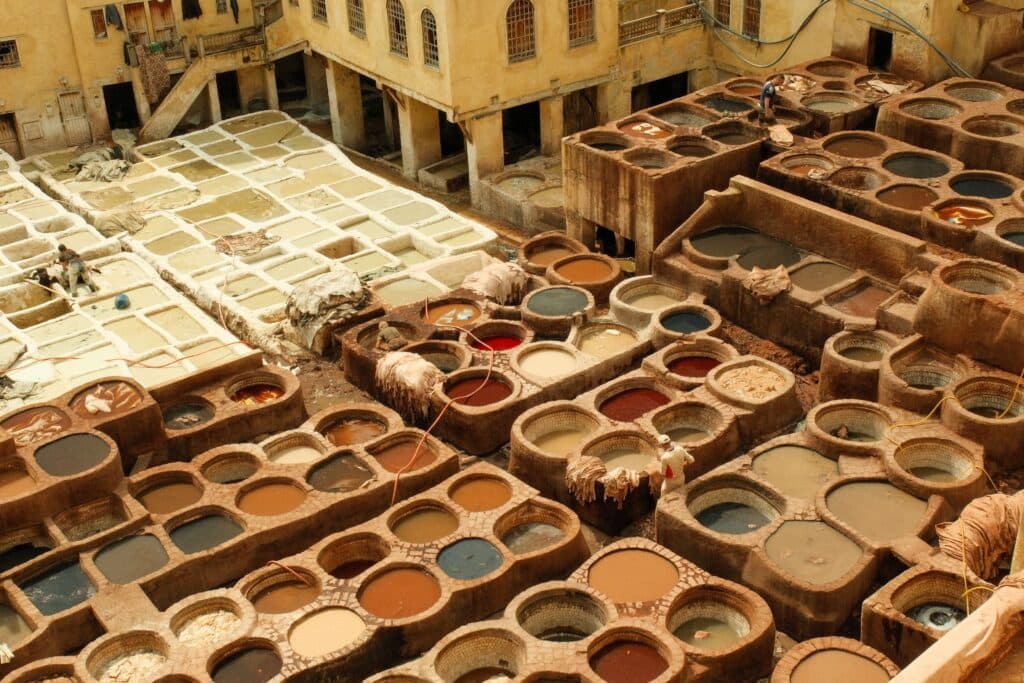
Visit the Chouara Tannery

The Chouara Tannery is one of Fes’s most recognizable sights. Traditional leatherworkers continue to process and dye leather using longstanding methods.

Viewing terraces around the tannery provide an elevated perspective over the colorful dyeing vats. The surrounding leather shops are also part of the traditional craft quarter.

05

Walk Through the Mellah

The Mellah, Fes’s historic Jewish quarter, offers a different architectural and historical perspective on the city. Its streets and buildings reflect the long presence of Jewish communities in Moroccan urban life.

The area also provides access to sites connected with Fes’s Jewish heritage, including the historic Ibn Danan Synagogue.

06

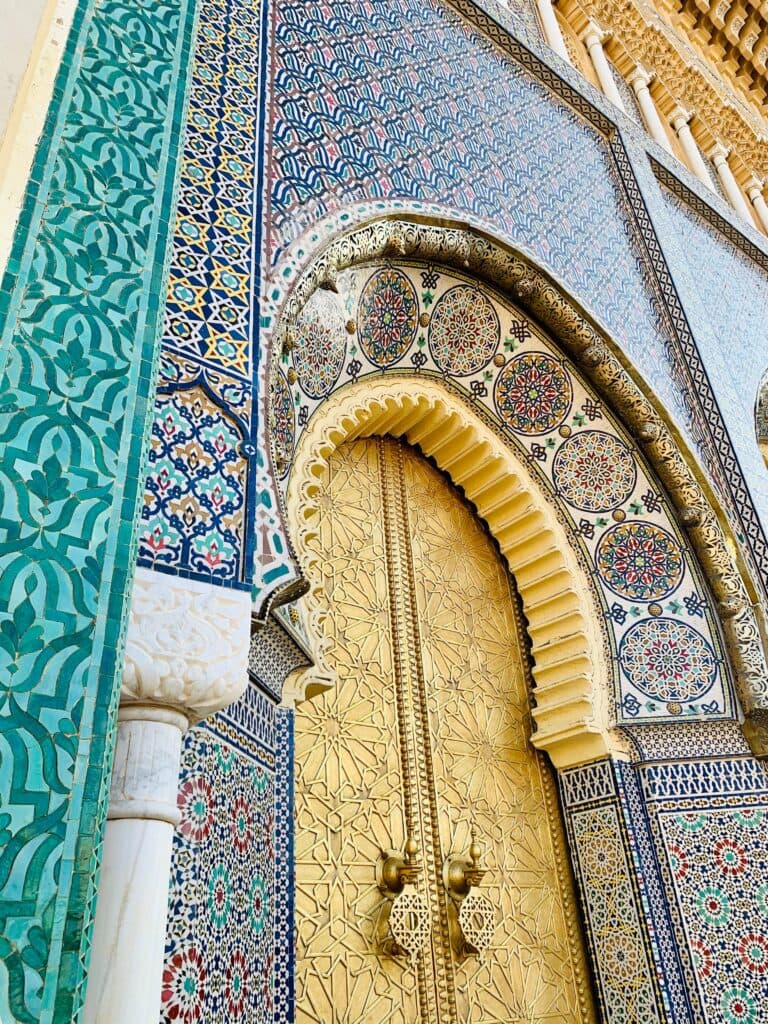
See the Royal Palace Gates

The ornate gates of the Royal Palace of Fes are among the city’s most recognizable architectural landmarks. Although the palace itself is not generally open to visitors, the impressive golden gates can be admired and photographed from outside.

The gates showcase detailed Moroccan craftsmanship, including zellij tilework, carved decoration, and traditional geometric patterns. They provide a striking contrast with the narrow streets and historic buildings of the medina.

07

Explore the Souks

The souks of Fes are filled with traditional products including leather goods, ceramics, textiles, spices, metalwork, and handcrafted items.

Take your time comparing products and prices rather than feeling pressured to buy immediately. Exploring the souks is as much about observing the craftsmanship and atmosphere as it is about shopping.

Chouara Tannery in Fes Morocco

04

How Much Time Do You Need in Fes?

For most travelers, two full days and three nights is a comfortable amount of time to experience Fes. This gives you enough time to explore the historic medina, visit major landmarks, discover traditional crafts, and experience the city’s food and atmosphere without rushing.

If you’re particularly interested in history, architecture, or photography, adding another day allows you to explore at a slower pace and visit places outside the main medina.

01

One Day

One day can cover the main highlights if your schedule is limited. Focus on Fes el-Bali, Bou Inania Madrasa, the souks, Chouara Tannery, and a few of the city’s most important historic sites.

A local guide can make a one-day visit considerably more efficient because the medina is large and its narrow streets can be confusing for first-time visitors.

02

Two Days

Two days is the best option for most visitors. Spend the first day exploring the historic medina and its major monuments, then use the second day to discover the Mellah, artisan quarters, food, viewpoints, and parts of the city beyond the main tourist route.

03

Three Days

Three days are ideal if you want a deeper cultural experience. You can explore the medina at a relaxed pace, spend more time with local artisans, visit additional historical sites, and enjoy Fes without constantly watching the clock.

04

Suggested Two-Day Itinerary

Day 1: Explore Fes el-Bali, Bab Bou Jeloud, Bou Inania Madrasa, the souks, and Chouara Tannery.

Day 2: Visit the Mellah, explore Fes’s Jewish heritage, see the Royal Palace gates, discover additional artisan quarters, and enjoy the city from one of its viewpoints.

If Fes is part of a longer Morocco itinerary, two days is generally enough to experience its main highlights while leaving time for other destinations.

05

Best Time to Visit Fes

Fes can be visited throughout the year, but spring and autumn generally offer the most comfortable conditions for walking through the medina and exploring the city’s historic sites.

01

Spring (March to May)

Spring is one of the best seasons to visit Fes. Temperatures are generally pleasant for walking, while the surrounding landscapes become greener after the winter months.

March and April can occasionally bring rain, so carrying a light waterproof layer is useful.

02

Summer (June to August)

Summer can be very hot, particularly during the afternoon. Temperatures can rise significantly, making long walks through the medina uncomfortable during the hottest hours.

If you visit in summer, explore outdoor areas early in the morning or later in the afternoon and take breaks during the middle of the day.

03

Autumn (September to November)

Autumn is another excellent period to visit. Temperatures gradually become more comfortable after the summer heat, making it easier to spend several hours exploring the medina on foot.

September can still be quite warm, while October and November are generally more comfortable.

04

Winter (December to February)

Winter temperatures in Fes are cooler than many first-time visitors expect. Days can be pleasant, but mornings and evenings can become cold, and occasional rain is possible.

Bring layers, particularly if you plan to spend long periods outdoors or stay in a traditional riad where indoor spaces may not be centrally heated.

05

Our Recommendation

For comfortable sightseeing and long walks through the medina, March to May and September to November are generally the best periods to visit Fes. These seasons offer a good balance between temperature, sightseeing conditions, and overall travel comfort.

06

Where to Stay in Fes

Choosing where to stay in Fes depends largely on whether you want to be immersed in the historic medina or prefer the convenience of the modern city. Both areas offer different experiences.

01

Stay Inside the Medina

Staying inside Fes el-Bali is the best option if your priority is experiencing the historic character of the city. Traditional riads are tucked behind modest doors and often open into beautiful courtyards decorated with zellij, carved plaster, and traditional Moroccan details.

The main advantage is proximity to the city’s historic attractions, souks, and restaurants. The main streets can be busy, but quieter riads are often found deeper inside the medina.

02

Stay Near Bab Bou Jeloud

The area around Bab Bou Jeloud, also known as the Blue Gate, is convenient for first-time visitors. It provides relatively easy access to the medina while remaining close to restaurants, cafés, taxis, and major streets.

It’s a practical choice if you want to explore Fes on foot without being too far inside the maze of the old city.

03

Stay in Ville Nouvelle

Fes’s modern district, known as Ville Nouvelle, offers modern hotels, wider streets, restaurants, cafés, and easier vehicle access.

This area can be more convenient for travelers who prefer modern accommodation or who are using Fes as a base for exploring destinations outside the city.

04

Stay in a Traditional Riad

A riad can be one of the most memorable accommodation experiences in Fes. These traditional Moroccan houses are typically organized around an interior courtyard and often feature detailed tilework, carved wood, and traditional decoration.

If experiencing Moroccan architecture and hospitality is an important part of your trip, a well-reviewed riad inside or near the medina is worth considering.

05

Which Area Is Best?

For a first visit focused on history and culture, staying in or near Fes el-Bali is generally the best choice. If convenience, vehicle access, and modern facilities are more important, Ville Nouvelle may be a better fit.

Royal Palace gates in Fes Morocco

07

Getting to Fes

Fes is one of Morocco’s main cities and is well connected to other major destinations by train, bus, road, and air. The best option depends on where you’re coming from and how Fes fits into your itinerary.

01

From Marrakech

Traveling from Marrakech to Fes is possible by train, bus, car, or domestic flight. By road, the journey is long, so travelers driving between the two cities should allow plenty of time and consider breaking the journey with an overnight stop.

If you’re planning a wider Morocco itinerary, it can be more efficient to visit Fes as part of a route through central or northern Morocco rather than making a direct return journey.

02

From Casablanca

Fes is easily accessible from Casablanca by train and road. The train is a practical option for travelers who prefer not to drive, while a private transfer provides more flexibility with departure times and stops.

03

From Rabat

Rabat and Fes are connected by Morocco’s rail network, making the train one of the most convenient ways to travel between the two cities. The road journey is also straightforward for travelers using a private vehicle.

04

From Chefchaouen

Fes is a common starting point for travelers visiting Chefchaouen. The journey can be made by bus, private transfer, or rental car.

A private vehicle gives you greater flexibility if you want to stop at viewpoints or explore smaller towns along the way.

05

By Train

Fes is connected to Morocco’s national railway network, making rail travel a convenient choice when arriving from cities such as Casablanca, Rabat, and Marrakech.

For longer journeys, check the current timetable and choose a departure that fits your itinerary.

06

By Air

Fes–Saïss Airport serves the city and has connections to several Moroccan and international destinations. Flying can be useful if you’re arriving from a destination that has a convenient direct connection or if you want to save time on a longer journey.

07

By Private Tour

A private tour allows you to combine Fes with other destinations without having to arrange separate transportation. This can be particularly useful for travelers planning a multi-city Morocco itinerary and wanting flexibility over where and when to stop.

08

Is Fes Safe to Visit?

Yes. Fes is generally a safe destination for travelers, and millions of visitors come to Morocco’s historic cities each year. The main concerns for visitors are usually practical matters such as navigating crowded areas, avoiding unofficial guides, and keeping personal belongings secure.

The medina can become very crowded, particularly around busy souks and popular attractions. Keep your valuables secure and remain aware of your surroundings in crowded areas.

You may also encounter people offering unofficial guiding services in the medina. If you want a guided experience, choosing a reputable licensed guide can make your visit more informative and help you avoid unnecessary difficulties.

When shopping in the souks, prices are often negotiable. Take your time, compare products, and don’t feel pressured to buy something simply because a seller approaches you.

If you’re exploring the medina at night, stick to well-used streets and follow local advice about areas you are unfamiliar with.

As with any major tourist destination, use normal precautions, respect local customs, and keep important belongings secure. With sensible preparation, Fes can be a safe and rewarding city to explore.

09

Frequently Asked Questions

01

Is Fes worth visiting?

+

Yes. Fes is one of Morocco’s most important cultural and historical destinations. Its ancient medina, traditional craftsmanship, historic architecture, and long intellectual heritage make it particularly rewarding for travelers interested in Moroccan history and culture.

02

How many days do you need in Fes?

+

For most travelers, two full days are enough to experience the city’s main attractions without rushing. Travelers with a stronger interest in history, architecture, and culture may prefer three days.

03

What is Fes famous for?

+

Fes is famous for its historic medina, traditional Moroccan craftsmanship, leather tanneries, religious and educational heritage, and distinctive architecture. The city is particularly known for Fes el-Bali and its centuries-old artisan traditions.

04

Is Fes better than Marrakech?

+

Fes and Marrakech offer different experiences. Fes is particularly strong for history, traditional craftsmanship, and exploring an ancient medina, while Marrakech is known for its lively atmosphere, gardens, palaces, and major tourist attractions. Choosing between them depends on what you want from your Morocco trip.

05

Can you visit Fes and Chefchaouen together?

+

Yes. Fes and Chefchaouen are commonly combined in a northern Morocco itinerary. You can travel between the two by bus, rental car, or private transfer.

06

What is the best time to visit Fes?

+

Spring and autumn generally offer the most comfortable weather for exploring the city on foot. March to May and September to November are particularly good periods.

07

Is Fes suitable for families?

+

Yes. Families can enjoy Fes’s historic sites, markets, architecture, and cultural experiences. However, the medina’s narrow streets and crowded areas require extra attention when traveling with young children.

08

Should I stay inside the Fes medina?

+

For a first visit, staying inside or near Fes el-Bali is a good choice if you want to experience the city’s historic atmosphere and remain close to major attractions. Travelers who prefer modern facilities and easier vehicle access may prefer Ville Nouvelle.

10

Plan Your Visit to Fes

Fes offers one of the deepest cultural experiences in Morocco. From the winding streets of Fes el-Bali to its historic madrasas, artisan workshops, tanneries, and traditional riads, the city reveals layers of Moroccan history at almost every turn.

Give yourself enough time to explore without rushing, and consider using a knowledgeable local guide to understand the history behind the places you visit. Whether Fes is the starting point of your Morocco journey or one stop on a longer itinerary, it is a destination worth experiencing at a slower pace.

Explore Morocco Your Way

Include Fes in Your Morocco Journey

Tell us your dates, arrival city, group size and the places you want to experience. We can help you shape a practical private route around your time in Morocco.

Planning Support

  • Private Morocco routes
  • Local destination advice
  • Realistic driving times
  • Flexible accommodation levels
  • Sahara and cultural journeys