
01
Explore the Historic Medina
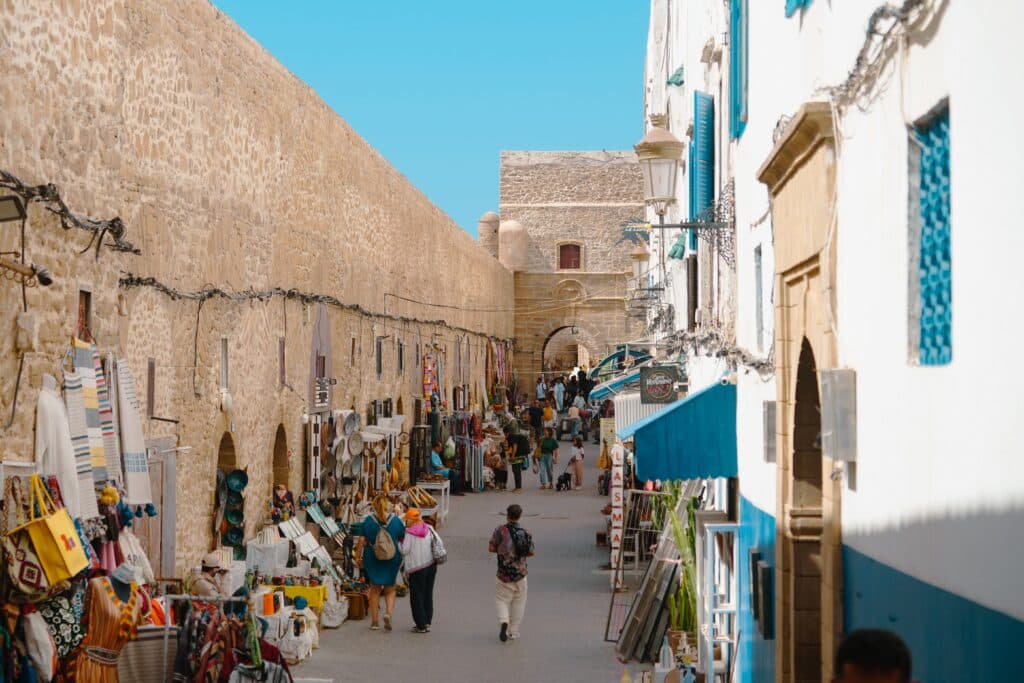
Essaouira’s medina is compact and easy to explore on foot. Wander through its narrow streets, browse local crafts, and discover traditional doors, markets, galleries, cafés, and historic buildings.
Morocco Destination Guide
Local travel guidance, practical planning information and destination ideas for your Morocco journey.
Destination Guide
This guide covers what to see, how long to stay, when to visit, where to stay, transport, safety and practical planning advice.
01
Region: Marrakesh-Safi
Known For: Historic Medina, Skala de la Kasbah, fishing port, Atlantic beach, traditional crafts, and water sports
Recommended Stay: 2 nights
Best Time to Visit: March to May and September to October
Main Airport: Essaouira-Mogador Airport
Main Highlight: Historic Medina and Atlantic waterfront
Best Way to Explore: On foot in the Medina and port area, with taxis or private transportation for places outside the city
02
Essaouira is a relaxed Atlantic coastal city known for its historic medina, traditional fishing port, long beaches, and distinctive white-and-blue architecture. Its location on Morocco’s Atlantic coast gives the city a refreshing seaside atmosphere that contrasts with the country’s inland destinations.
The city’s historic medina is a UNESCO World Heritage Site, with narrow streets, traditional markets, old fortifications, and small shops selling Moroccan crafts.
Essaouira’s medina is compact and easy to explore on foot. Wander through its narrow streets, browse local crafts, and discover traditional doors, markets, galleries, cafés, and historic buildings.
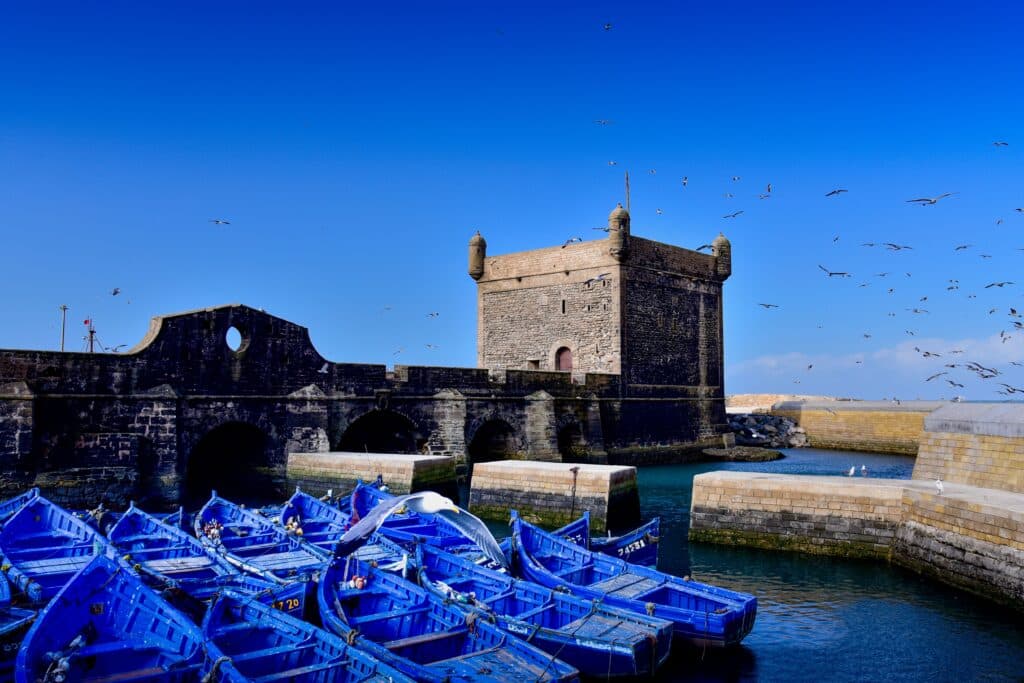
The fishing port is one of Essaouira’s most recognizable areas. Watch local fishermen bringing in their catch, explore the harbor, and see the traditional blue fishing boats that have become closely associated with the city.
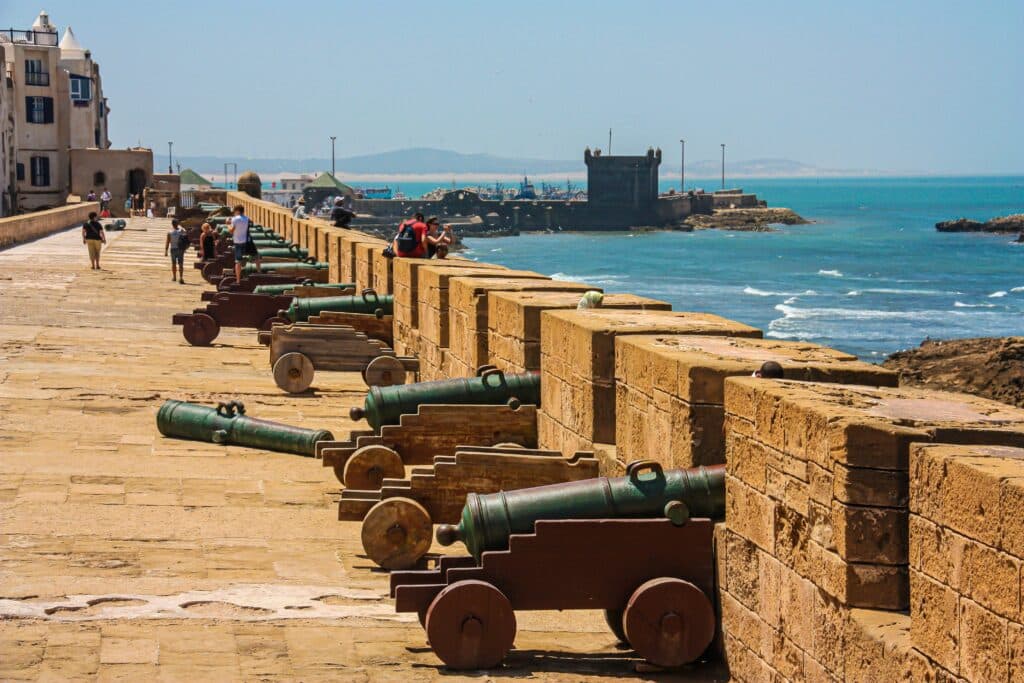
The Skala de la Kasbah is a historic fortified section overlooking the Atlantic. Its old cannons, stone walls, and ocean views make it one of the best places to appreciate Essaouira’s coastal setting.
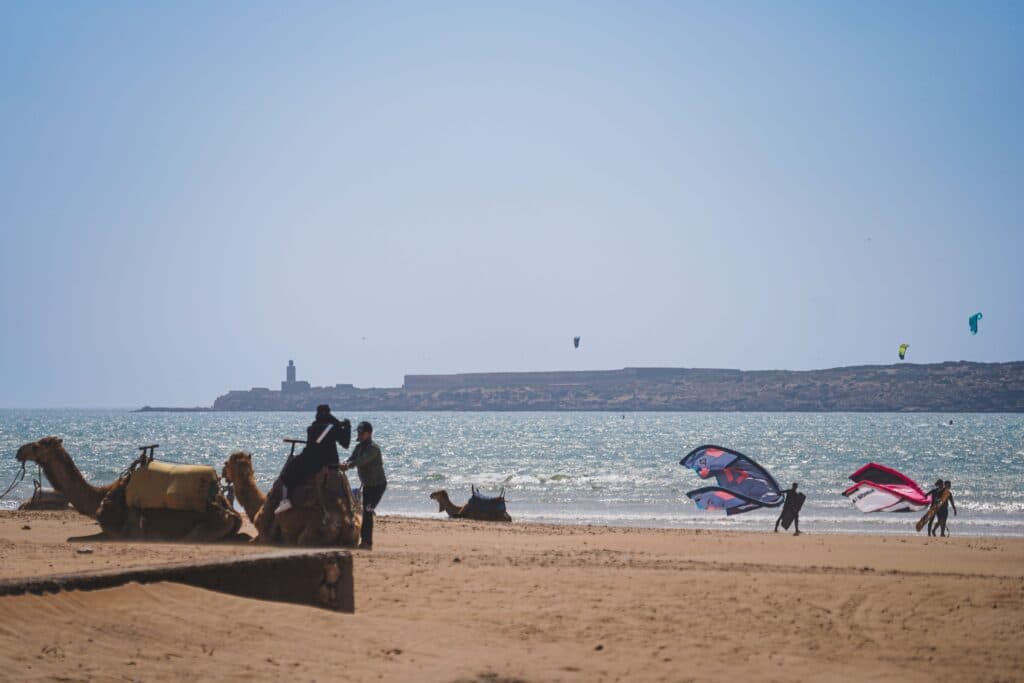
Essaouira’s long sandy beach stretches south of the historic city. It is ideal for a walk, relaxing by the ocean, or enjoying the strong Atlantic breeze that gives the city its distinctive character.
Essaouira has a long association with artists, musicians, and craftspeople. Its galleries, workshops, woodcarving traditions, and annual cultural events contribute to the city’s creative atmosphere.
With its active fishing port, Essaouira is a natural place to enjoy fresh seafood. The restaurants and seafood stalls around the port offer visitors an opportunity to experience some of the city’s local flavors.
Essaouira is particularly appealing to travelers who want to combine Moroccan history with a relaxed coastal atmosphere. Its manageable size makes it easy to explore without the pace and intensity of larger Moroccan cities.
03
Essaouira’s main attractions are concentrated around the historic medina, harbor, fortifications, and Atlantic coastline, making the city easy to explore on foot.
Walk through the narrow streets of the UNESCO-listed medina and discover traditional shops, artisan workshops, galleries, cafés, and local markets.
Take your time exploring the smaller streets away from the main routes, where you can find handmade Moroccan crafts and local products.
Essaouira’s fishing port is one of the city’s liveliest places. Watch fishermen working around the harbor, see the traditional blue boats, and explore the area’s seafood stalls.
The port is especially interesting in the morning when fishing activity is at its busiest.
The Skala de la Kasbah is a historic defensive platform overlooking the Atlantic. Walk along the stone ramparts and see the old cannons positioned toward the ocean.
It is also one of the best places in the medina for coastal views.
The Skala du Port is another historic fortification near the harbor. Its distinctive stone gateway and defensive walls provide excellent views of the fishing port and Atlantic Ocean.
The long beach south of the medina is ideal for a coastal walk or a relaxing afternoon.
Because Essaouira is known for its strong winds, the beach is also popular for windsurfing and kitesurfing.
Essaouira is particularly known for its traditional thuya wood craftsmanship. Explore workshops and small stores around the medina to see local artisans creating decorative objects and furniture.
Head toward the fishing port to find fresh seafood prepared locally. It’s one of the simplest ways to experience Essaouira’s connection with the Atlantic.
Essaouira has a long-standing artistic tradition, with galleries and workshops displaying paintings, photography, crafts, and contemporary Moroccan art.
Finish the day along the ramparts or beach and watch the sun set over the Atlantic. The combination of the historic walls, ocean, and changing evening light makes this one of the city’s most memorable experiences.
04
For most travelers, two nights and one full day are enough to experience Essaouira’s main attractions. If you want more time for the beach, water sports, galleries, or a slower pace, staying for two full days is ideal.
With one full day, focus on the historic center. Explore the Medina, Skala de la Kasbah, Skala du Port, and fishing harbor, then spend the afternoon walking along the beach.
Finish the day with sunset views from the ramparts or waterfront.
Two days allow you to explore without rushing.
Spend the first day discovering the Medina, port, fortifications, and local artisan workshops. On the second day, enjoy the beach, try a water sport, visit galleries, or simply experience the city’s cafés and restaurants.
Three days are ideal if you prefer a slower coastal holiday or want to explore the surrounding area.
You can use the additional time for beach activities, countryside excursions, local food experiences, or nearby attractions.
Day 1: Explore the Medina, visit the Skala de la Kasbah and Skala du Port, discover the fishing harbor, and enjoy fresh seafood.
Day 2: Walk along Essaouira Beach, explore artisan workshops and galleries, try windsurfing or kitesurfing, and finish with an Atlantic sunset.
For travelers visiting from Marrakech, Essaouira also works well as a two-night coastal escape before continuing to other destinations in Morocco.
05
Essaouira can be visited throughout the year, thanks to its mild Atlantic climate. The city is generally cooler and windier than inland destinations such as Marrakech, making it a popular coastal escape during the warmer months.
Spring offers comfortable temperatures for exploring the medina, walking along the coast, and visiting nearby attractions. The weather is generally pleasant without the stronger summer heat found inland.
Summer is one of the most popular periods to visit Essaouira. The Atlantic breeze keeps temperatures relatively moderate, although the wind can become strong.
This is an especially good period for windsurfing and kitesurfing.
Early autumn is another excellent time to visit. September can still feel like summer, while October and November usually bring comfortable conditions for walking and sightseeing.
Winter is mild compared with many European destinations, although rain and stronger winds are possible.
Bring a light jacket, particularly for evenings and windy days along the coast.
For a combination of comfortable sightseeing and coastal activities, March to May and September to October are particularly good periods to visit Essaouira. Summer is ideal for travelers interested in beach activities and water sports, while winter offers a quieter atmosphere.
06
Essaouira is compact, so choosing where to stay largely depends on whether you prefer the atmosphere of the historic medina or the space and openness of the beachfront.
The Medina is the best choice for travelers who want to be surrounded by Essaouira’s historic architecture, shops, cafés, galleries, and traditional atmosphere.
Riads and small guesthouses are particularly common here.
The area around the fishing port is convenient for travelers interested in seafood, harbor views, and easy access to the Skala and Medina.
It’s also a good location for short stays when sightseeing is the main priority.
Accommodation near Essaouira Beach provides easier access to the Atlantic, coastal walks, and water sports.
This area can be preferable if you want more space and a quieter atmosphere while remaining close to the city.
The newer parts of Essaouira offer modern hotels, apartments, and guesthouses. They can be a good option for travelers who prefer contemporary accommodation, easier vehicle access, or a quieter environment.
For a first visit focused on history and local atmosphere, the Medina is the most convenient choice. If your priority is the beach and water sports, consider staying near the Atlantic coast instead.
07
Essaouira is easy to reach from Marrakech and other major Moroccan cities. Its location on the Atlantic coast makes it a popular stop for travelers combining inland Morocco with a coastal stay.
Marrakech is the most common starting point for travelers heading to Essaouira. The cities are connected by road, with regular buses, rental cars, and private transfers available.
A private transfer is particularly convenient if you want flexibility along the route.
Travelers can reach Essaouira from Casablanca by road, bus, or private transfer. Because of the distance, a private vehicle can be useful if Essaouira is part of a longer coastal itinerary.
Essaouira and Agadir are connected by road along Morocco’s Atlantic coast. The journey can be combined with stops at coastal towns and viewpoints along the way.
Safi is located north of Essaouira along the Atlantic coast and can be reached by road. This route can work well for travelers exploring Morocco’s coastal destinations.
Regular intercity bus services connect Essaouira with cities including Marrakech and other destinations. Buses are generally an affordable option for independent travelers.
Driving gives you more flexibility to stop along the Atlantic coast and explore places outside Essaouira.
If you’re traveling by rental car, check parking arrangements with your accommodation before arriving in the Medina, where vehicle access is limited.
A private transfer is a comfortable option for travelers who want door-to-door transportation from Marrakech, Agadir, or another Moroccan city.
Essaouira can also be included as part of a wider private Morocco itinerary combining Marrakech, the Atlantic coast, and southern Morocco.
08
Yes. Essaouira is generally considered a comfortable destination for tourists, particularly around the Medina, waterfront, and main tourist areas. As with any busy destination, normal precautions are still recommended.
The Medina is busy during the day, especially around the main shopping streets and markets. Keep your belongings secure and be aware of your surroundings in crowded areas.
Essaouira has a relaxed evening atmosphere, with restaurants and cafés remaining active around the Medina and waterfront. If you’re unfamiliar with the city, stick to well-used streets when walking at night.
The Atlantic can have strong waves and currents, and the wind can become powerful. Take care around the water and follow local beach or activity guidance, particularly if you’re swimming or participating in water sports.
If you’re visiting beaches or rural areas outside Essaouira, plan your transportation in advance and make sure you know how you’ll return to your accommodation.
Keep important documents secure, avoid carrying unnecessary valuables, and use normal precautions in crowded tourist areas.
For most visitors, Essaouira is an easygoing destination to explore, particularly when basic travel precautions are followed.
09
Yes. Essaouira is particularly worthwhile for travelers who enjoy historic medinas, Atlantic scenery, seafood, traditional crafts, and a relaxed coastal atmosphere.
For most travelers, one full day and two nights is enough to see the main attractions. Two full days are better if you want time for the beach, water sports, galleries, and a slower pace.
Essaouira is known for its historic medina, fishing port, Skala fortifications, Atlantic beach, strong coastal winds, traditional crafts, and artistic atmosphere.
Yes. Essaouira can be visited as a day trip from Marrakech, although staying overnight is better if you want to experience the city without rushing.
Yes. The city has a long Atlantic beach and is popular for coastal walks, windsurfing, and kitesurfing. The Atlantic conditions can be windy, so the beach experience is different from Morocco’s warmer Mediterranean resorts.
Yes. Essaouira and Agadir are connected by road along Morocco’s Atlantic coast, making it possible to include both cities in the same itinerary.
Spring and early autumn generally offer comfortable conditions for sightseeing. Summer is popular for water sports, while winter tends to be quieter but can be wetter and windier.
Yes. Families can explore the Medina, visit the port, enjoy the beach, and discover the city’s historic fortifications and artisan workshops.
Yes. Staying for two nights allows you to explore the Medina and port during the day and enjoy the city’s relaxed atmosphere in the evening.
10
Essaouira offers a refreshing coastal contrast to Morocco’s inland cities. Its historic Medina, Atlantic beaches, fishing port, fortifications, and artistic traditions make it an excellent destination for travelers looking for a slower pace.
The city also fits naturally into itineraries connecting Marrakech, Agadir, and Morocco’s Atlantic coast, making it an easy addition to a wider Morocco trip.
Explore Morocco Your Way
Tell us your dates, arrival city, group size and the places you want to experience. We can help you shape a practical private route around your time in Morocco.
Planning Support